Disclaimer
This article is for informational and educational purposes only and does not constitute financial advice. The author may hold positions in the assets discussed. Any discussion on jurisdiction, exchanges or custody providers reflect the author's personal views and experiences and is not a personal recommendation. Always do your own research and seek professional guidance before making investment or custody decisions.
Last Updated on December 18, 2025
Roman currency holds an enduring fascination for the modern student of the history of hard money.
Sure, it’s about famous coins, precious metals and debasement. But it’s also about power, trade and economic might on a scale the ancient world had never seen.
The denarius was the cornerstone of commerce in the ancient world for over 400 years. Yes, it had a spectacular fall from grace, but it was also a phenomenally long period of dominance.
Understanding the history of Roman currency tells you everything you need to know about how empires rise and fall and how critical the monetary system is to all of it.
The story of Rome will help you understand everything that is wrong and right about our modern monetary system.
The Origins of Roman Currency and Early Bronze Coinage (509-211 BCE)
Before Rome had coins, they had crude lumps of bronze. These were unstandardised pieces where value had to be agreed based on weight.
Around the 5th century BC the Romans had moved to standardise their bronze into large ingots with a defined weight and quality. This was called the aes signatum.
But large bars are difficult to transport and inconvenient for small transactions.
So around the 3rd century BC bronze aes coins were introduced.
The bronze aes was the dominant form of money in the early years of the Roman Republic but it didn’t take long before the Romans learned the value of silver coinage, which were a higher value than bronze.
After first minting silver coins in 310BC, the Punic Wars catapulted silver to become the backbone of the monetary system.
The Denarius: Rome’s Silver Standard (211 BCE – 3rd Century CE)
In 211 BC, during the Second Punic War, Rome reorganised their silver currency and established the coin that would change the ancient world: the denarius.
While the denarius had been minted in small quantities since 310 BC, it was in 211 BC that it became the dominant monetary unit.
This silver coin weighed about 4.5 grams and contained roughly 95% silver. It was valued at 10 asses (hence the name—denarius means “containing ten”).
This denarius was revolutionary. At just the right size, weight and value, it became the reserve currency of the Mediterranean.
As Kenneth Harl notes:
“In the Second Punic War, the Republic reforged it’s silver and bronze currency into a system of denominations that endured for the next 450 years.”
The denarius wasn’t just a coin. It was the cornerstone of a monetary system that included other denominations:
- The aureus (25 denarii) – gold
- The quinarius (0.5 denarii) – silver
- The sestertius (0.25 denarii) – bronze
- The aes – base bronze coins
Famous denarii featured the portraits of Julius Caesar, Augustus, and later emperors. These coins served as propaganda, spreading the image and message of Rome’s leaders across the empire. When Caesar put his portrait on coins, he was making a bold political statement—this was the face of Roman power.
The denarius remained remarkably stable for over 200 years, before it began its famous debasement. That’s an extraordinary achievement for any currency, ancient or modern.
Read More: The Roman Denarius: A History of the Iconic Silver Coin
Read More: How Much is a Roman Denarius Worth Today?
Read More: What Was The Silver Content of a Denarius?
The Gold Aureus (1st Century BCE – 4th Century CE)
The gold aureus had existed during the years of the Roman Republic.
But in 46BC, Julius Caesar began to mint it in much larger quantities.
The aureus weighed 8g with a fineness of 95%. It was worth 25 denarii.
This gold coin never superseded the denarius as the monetary standard but it did allow for higher value transactions and, importantly, for military pay.
Why gold? The same reason gold has always been used throughout history – it is the ultimate store of value. However, it was also useful as propaganda for the emperors.
When the denarius underwent its great debasement, so too did the aureus.
Although it remained the primary coin of the Roman Empire until it was superseded by the solidus in 301AD.
Bronze and Base Metal Coins: The People’s Money
While gold and silver dominated high-value transactions, bronze coins still remained and were the everyday money of ordinary Romans.
The sestertius was the dominant bronze coin and the workhorse of Roman commerce. It was perfect for market transactions—buying bread, vegetables, or even wine.
The bronze coinage system included:
- Sestertius (4 asses)
- Dupondius (2 asses)
- As (base unit)
- Semis (0.5 asses)
- Quadrans (0.25 asses)
These coins circulated heavily in local markets and provincial trade. They were the coins people actually used daily, unlike the prestigious gold aurei that most citizens rarely handled.
Archaeological evidence from coin hoards tells us interesting stories. Bronze coins are found in enormous quantities, often worn smooth from years of use. This wasn’t the money of the elite. It was the money of the shopkeepers and labourers.
Currency Debasement and the Crisis of the Third Century
Ancient Rome is famous for a strength and longevity of its standard coin – the denarius.
It is also famous for the debasement that eventually brought it all to an end.
In the modern day fiat currency era, debasement happens by increasing the supply of currency.
In the ancient world, with precious metals as money, they couldn’t increase the supply. But they could reduce the precious metals content of the coinage, which in effect is the same thing.
And that’s exactly what they did.
They reduced the precious metal content of coins while maintaining their face value in a form of hidden taxation and inflation.
Nero started the process around 64 CE, reducing the silver content of the denarius from 95% to about 90%. Not terrible, but it set a dangerous precedent.
By the reign of Marcus Aurelius (161-180 CE), the denarius was only 75% silver. Under Septimius Severus (193-211 CE), it fell to 50%.
Then came the Crisis of the Third Century.
Between 235 and 284 CE, Rome had 26 “legitimate” emperors and countless usurpers. The empire was constantly at war—against barbarian invasions, Persian forces, and internal rivals. War costs money, and Rome was running out.
The government’s solution? Debase the currency even more.
The antoninianus was introduced in 215 CE as a “double denarius”—supposedly worth two denarii but containing only 1.5 denarii worth of silver. At first, people accepted it. But as the silver content continued to drop, trust evaporated.
By 270 CE, the antoninianus was less than 5% silver. It was essentially a bronze coin with a thin silver wash. People weren’t stupid. They recognised the coins were nearly worthless.
Inflation ravaged the economy. Prices skyrocketed.
The social consequences were devastating. The middle class saw their savings destroyed. Trade contracted as merchants refused payment in debased coinage. The empire’s tax base collapsed as people returned to barter.
Read More: 5 Lessons We Can Learn From the Inflation in Ancient Rome
Diocletian’s Reforms: Attempting to Save Roman Currency (284-305 CE)
Emperor Diocletian understood the empire was in crisis.
In 294 CE, he introduced a new silver coin, the argenteus, attempting to restore a silver standard. It contained about 95% silver—similar to the original denarius.
He also restructured the bronze coinage system and introduced new gold denominations that would eventually evolve into Constantine’s solidus.
But Diocletian’s most famous monetary intervention was his Edict on Maximum Prices in 301 CE. He established price ceilings on over 1,000 goods and services, with death as the penalty for violations.
It failed spectacularly.
Price controls have never worked throughout history, and they didn’t work in ancient Rome. Goods disappeared from official markets as merchants hoarded or sold on the black market. The edict became unenforceable and was eventually abandoned.
Why did Diocletian’s reforms ultimately fall short? He couldn’t solve the fundamental problem: the empire’s expenses exceeded its revenue. Without addressing that, no monetary reform could succeed.
The empire increasingly shifted from a monetary economy to tax-in-kind. Instead of paying taxes in debased coins, provinces paid in grain, livestock, and manufactured goods. The government similarly paid soldiers and officials in rations rather than currency.
This was a step backward from the sophisticated monetary economy Rome had built. It signalled the beginning of the end.
Constantine and the Solidus: A New Gold Standard (306-476 CE)
In 312CE Constantine the Great began minting the solidus in large quantities. This had been introduced by Diocletian on a small scale but Constantine saw it as the way to save the monetary system. A gold coin weighing 4.55 grams with 95% gold purity, Constantine’s solidus permanently replaced the aureus.
The name literally means “solid,” and it lived up to its reputation. After decades of debased currency, the solidus offered stability. And people began to trust it.
While
The solidus became the Byzantine Empire’s currency after the Western Empire fell in 476 CE. Remarkably, it maintained its weight and purity for another 700 years. That’s over 1,000 years of monetary stability from a single coin design.
The solidus was so successful that Islamic caliphates and medieval European kingdoms copied it. The Arabic dinar is a direct descendant of the solidus.
The Fall of Roman Currency and the End of Antiquity (4th-5th Century CE)
The Western Roman Empire’s collapse in 476 CE wasn’t sudden. It was a gradual process of fragmentation and decay.
The monetary system collapsed alongside political authority. As barbarian kingdoms carved up the Western Empire, each developed its own coinage or simply stopped minting coins altogether.
Barbarian kings initially tried to maintain Roman-style coinage, often even keeping Roman imagery and legends. This wasn’t respect for Roman culture—it was practical. Roman coins had value and recognition.
But they couldn’t maintain production quality. Barbarian coins became increasingly crude, with lower precious metal content and poor striking quality.
The economy gradually shifted from a coin-based to an agrarian system. In the early Middle Ages, many regions returned to barter or used commodities like livestock as mediums of exchange.
The solidus survived in the Byzantine East. Constantinople remained a major economic power, and the Byzantine solidus (later called the nomisma or bezant) dominated Mediterranean trade for centuries.
The Legacy of Roman Currency: Influence on Modern Money
The influence of the Roman monetary system lived long after the end of the empire.
The Byzantine solidus evolved into the foundation of medieval European gold coinage. When Italian city-states like Florence and Venice issued gold coins, the florin and the ducat, in the 13th century, they were imitating the solidus.
Even Roman terminology survived. For example the name dinar is directly linked to the denarius.
The British monetary system of pounds, shillings, and pence followed a Roman-inspired model until decimalisation in 1971. This system originated with Charlemagne’s monetary reforms, which were themselves based on Roman precedents.
Currency debasement is a recurring theme throughout monetary history. Every government that has issued fiat currency has eventually debased it. The Romans weren’t the first to do this, but their experience provides a clear historical lesson: debasement leads to inflation, economic instability, and eventual currency failure.
We can see the parallels in the Roman story in the modern fiat era.
Studying Roman currency matters because it shows us that money isn’t just an economic tool. It’s a reflection of political stability, social order, and imperial power. When Rome’s currency was strong, the empire was strong. When the currency collapsed, so did the empire.
Conclusion
The history of Roman currency is the story of an empire’s rise and fall, told through precious metals.
From bronze bars to the denarius to the solidus, Roman money wasn’t just a medium of exchange. It was a tool of empire, a store of value, and a remarkable achievement in economic organisation.
What makes Roman currency so fascinating is that their challenges feel remarkably contemporary. They dealt with inflation, currency debasement, government overreach, and economic crises. Their solutions—both successful and disastrous—offer lessons that resonate today.
The denarius lasted over 400 years as a stable currency. The solidus maintained its weight and purity for over 1,000 years. These weren’t accidents. They were the result of discipline, sound monetary policy, and political stability.
When Rome abandoned sound money principles during the Crisis of the Third Century, the consequences were catastrophic. The empire nearly collapsed.
The lesson from Roman currency history is simple: sound money matters.
Rome built the greatest empire in ancient history partly because they built the greatest monetary system in ancient history. When that system failed, the empire followed.
History has a way of repeating itself. The patterns remain the same, only the names and dates change.
Sources
Harl, Kenneth W. Coinage in the Roman Economy, 300 B.C. To A.D. 700. Baltimore: Johns Hopkins University Press, 1996.
Image Credits
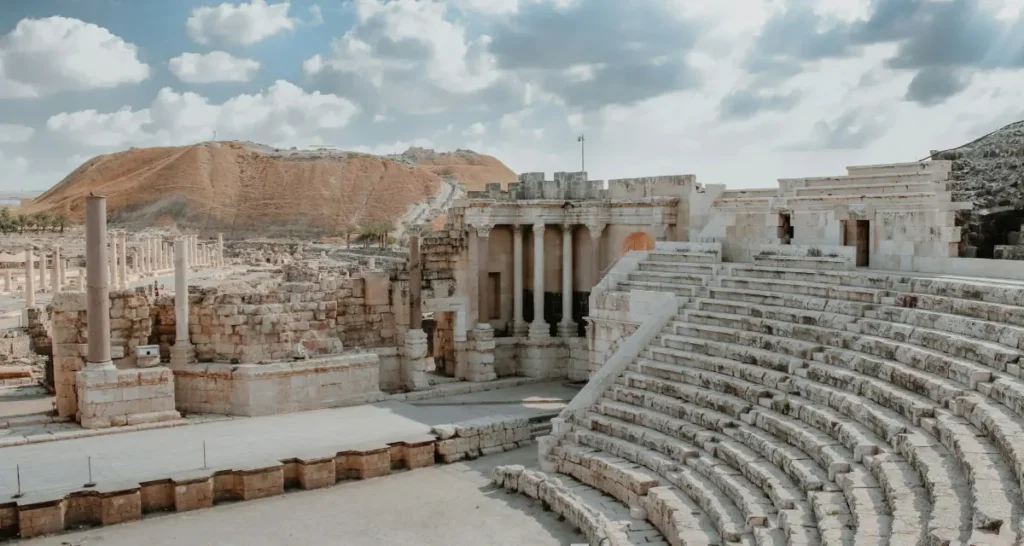
Roman Ruin by Briana Tozour on Unsplash


